BIOZYM No. 30 (capsules)
Field of Activity:
Application:
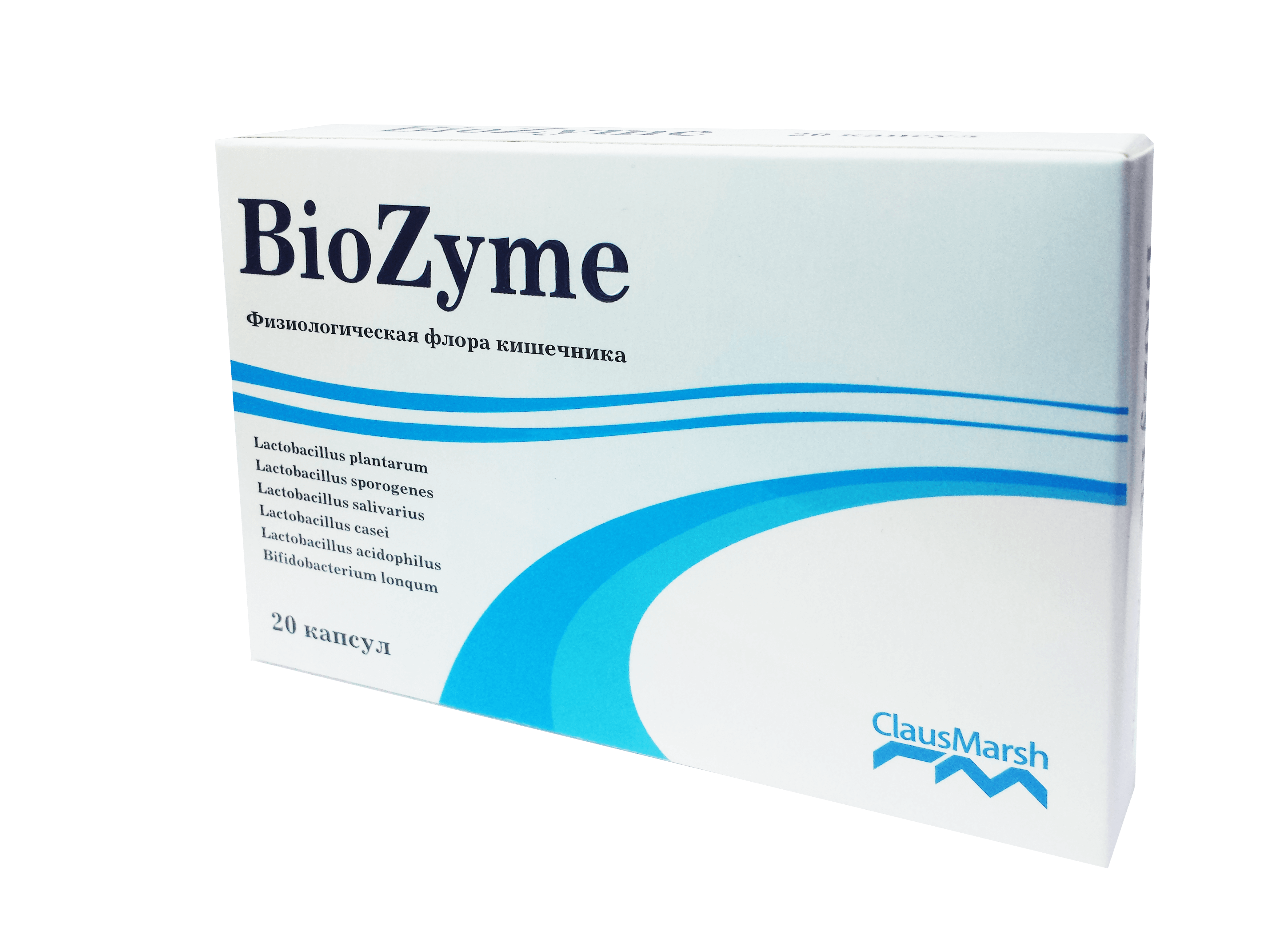
BIOZYME capsules Compound: Tzyme™ Gut Blend: 442 mg: Lactobacillus plantarum 3 x 10⁹. CFU; Lactobacillus sporogenes 3.8 x 10⁸ CFU; Lactobacillus salivarius 3 x 10⁸ CFU; Bifidumbacterium longum 2 x 10⁸ CFU; Lactobacillus casei 2.25 x 10⁸ CFU; Lactobacillus acidophilus 1 x 10⁹. CFU; Jerusalem artichoke (tuber) 20 mg; Lactoferrin 10 mg. Pharmacological properties: BIOZYM is a natural preparation containing 6 strains of probiotic lactic acid bacteria that restore, maintain and regulate the physiological balance of intestinal microflora: create unfavorable conditions for the reproduction and activity of pathogenic microorganisms. Bifidobacteria and lactobacilli form bacteriocins, which have an antibacterial effect against pathogenic and opportunistic flora and inhibit the growth of tumor cells. BIOZYM bacteria accelerate the breakdown of proteins and carbohydrates in food, stimulate intestinal motility, and are excellent immunomodulators: they activate the synthesis of immunoglobulins, interferon and cytokines. They participate in the synthesis and absorption of vitamin K, B vitamins, folic and nicotinic acids, promote the synthesis of essential amino acids, better absorption of calcium and vitamin D. Lactobacilli produce a number of hydrolytic enzymes, in particular lactase, which breaks down lactose and prevents the development of lactase deficiency. Jerusalem artichoke extract (Jerusalem artichoke) contains up to 77% of the prebiotic inulin. Inulin is a nutrient for beneficial bacteria, promotes their increased reproduction and distribution in the intestines. Lactoferrin is a key factor in innate immunity against pathogenic microorganisms. Lactoferrin is a natural antibiotic and has antibacterial, antiviral, antifungal, antiparasitic and antiallergic activity. It has both bacteriostatic and bactericidal effects. The bacteriostatic effect (suppresses the proliferation of bacteria) is manifested in the binding of iron ions in bacteria, which are necessary for their growth and vital activity. The bactericidal effect (kills bacteria) is based on the fact that it destroys the cell membrane of bacteria, as a result of which they die. Lactoferrin also has activity against Candida fungi, destroying the cell walls of fungi. Lactoferrin, by binding to viruses, prevents their penetration into cells and thus prevents or weakens the development of viral diseases. Indications: To improve the functional state of the intestinal microflora and gastrointestinal tract. Directions for use and dosage: Adults and children over 14 years old: 1-2 capsules 2 times a day on an empty stomach with a full glass of water. Children under 14 years old: 1-2 capsules per day. The minimum course of admission is 10 days. Contraindications: Individual intolerance to individual components of the drug. Release form: Plastic bottle containing 30 capsules. Free of fillers and allergens! Dispensed without a doctor's prescription. Dietary supplement Not a medicine. Storage conditions: Store at room temperature 15-250C, in a dry place, protected from light, out of reach of children. Manufacturer: CJ labs Inc., Miami, USA. The owner of the trademark and certificate of registration is Claus Marsh company, UK. Organization accepting claims in the Republic of Kazakhstan: Altes Pharm LLP, Almaty, st. Tolebi, 83, office 777. Tel: 8 (727) 292 27 08.
URSOFLOR 200mg
Field of Activity:
Application:
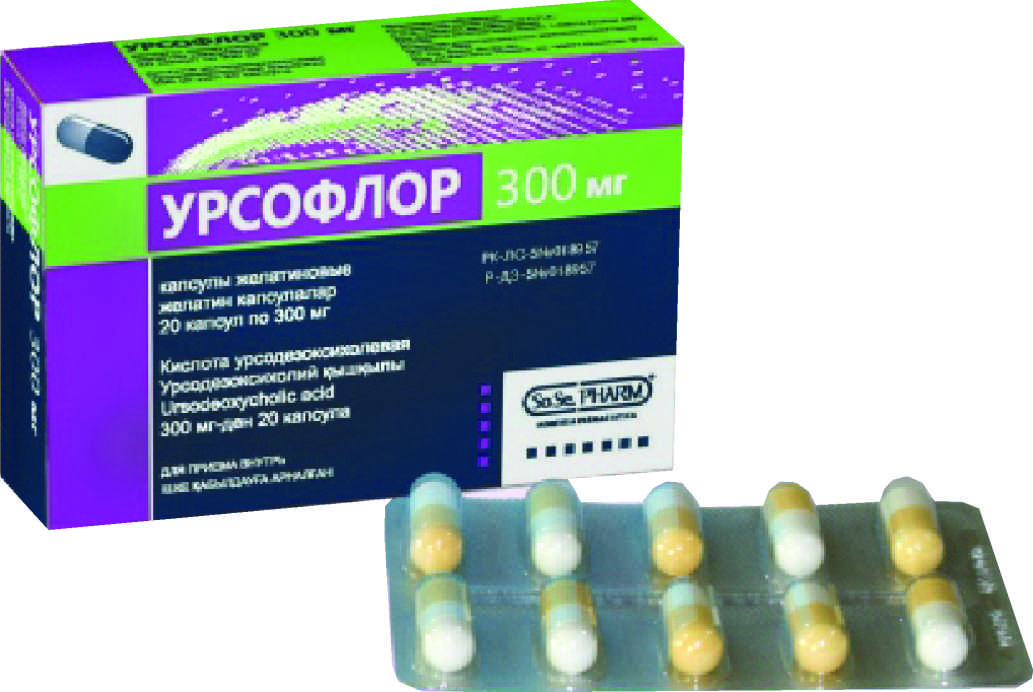
Ursoflor International nonproprietary name Ursodeoxycholic acid Dosage form Gelatin capsules 300 mg Compound One tablet contains active substance – ursodeoxycholic acid 300.00 mg, excipients: corn starch, anhydrous colloidal silicon dioxide, magnesium stearate, gelatin capsule composition: titanium dioxide (E171), iron oxide (III) yellow (E172), gelatin. Description Hard gelatin capsules with a white body and a yellow cap, size No. 0, the contents of the capsules are white powder. Pharmacotherapeutic group Preparations for the treatment of diseases of the biliary tract. Bile acid preparations. Ursodeoxycholic acid. ATX code A05AA02 Pharmacological properties Pharmacokinetics After oral administration, ursodeoxycholic acid is rapidly absorbed in the small intestine and the beginning of the ileum by passive transport and at the end of the ileum by active transport. The absorption rate is typically 60-80%. After absorption, bile acid undergoes almost complete conjugation in the liver with the amino acids taurine and glycine, and is then excreted in the bile. The first clearance through the liver reaches 60%. Depending on the daily dose and the existing liver disorder or condition, more and more hydrophilic ursodeoxycholic acid accumulates in the bile. At the same time, there is a relative decrease in the content of other, more lipophilic bile acids. Under the influence of intestinal bacteria, the drug is partially broken down into 7-keto-lithocholic acid and lithocholic acid. Lithocholic acid is hepatotoxic and can cause parenchymal liver lesions in some animal species. In humans, a very small amount is absorbed, which is sulfated in the liver and thus detoxified before being excreted in the bile or ultimately in the feces. The biological half-life of ursodeoxycholic acid is 3.5-5.8 days. Pharmacodynamics Ursoflor - a hepatoprotector has a choleretic effect. Reduces cholesterol synthesis in the liver, its absorption in the intestines and concentration in bile, increases the solubility of cholesterol in the biliary system, stimulates the formation and excretion of bile. Possessing high polar properties, UDCA forms non-toxic mixed micelles with apolar (toxic) bile acids, which reduces the ability of gastric reflux to damage cell membranes. In addition, UDCA forms double molecules that can be incorporated into cell membranes, stabilize them and make them immune to the action of cytotoxic micelles. Reduces the saturation of bile with cholesterol by inhibiting its absorption in the intestine, suppressing synthesis in the liver and reducing secretion into bile; increases the solubility of cholesterol in bile, forming liquid crystals with them; reduces the lithogenic index of bile. The result is the dissolution of cholesterol gallstones and the prevention of the formation of new stones. In addition, UDCA forms double molecules that can be incorporated into cell membranes, stabilize them and make them immune to the action of cytotoxic micelles. Reduces the saturation of bile with cholesterol by inhibiting its absorption in the intestine, suppressing synthesis in the liver and reducing secretion into bile; increases the solubility of cholesterol in bile, forming liquid crystals with them; reduces the lithogenic index of bile. The result is the dissolution of cholesterol gallstones and the prevention of the formation of new stones Indications for use - treatment of primary biliary cirrhosis - dissolution of radiolucent gallstones in the gallbladder Directions for use and doses The dosage regimen and duration of treatment with Ursoflor are determined individually, depending on the severity of the disease. Ursoflor capsules are taken orally with food, without chewing, with a sufficient amount of water. Dissolution of cholesterol gallstones – всю суточную дозу принимают 1 раз перед сном в дозе от 10 мг/кг массы тела до 15 мг/кг (2-5 капсул). Длительность процесса растворения желчных камней при применении препарата составляет от 6 месяцев до 2 лет. Если через 6 месяцев не наблюдается уменьшения размеров желчных камней, прием препарата считается нецелесообразным. После полного растворения камней прием продолжают в суточной дозе 600 мг (2 капсулы) 1 раз в день перед сном еще 3 месяца (для профилактики рецидивов). Первичный билиарный цирроз – рекомендуемая доза 300 мг 2 раза в сутки (с учетом 14 + 2 мг/кг) в течение 3 месяцев. Дозировки для лечения пациентов педиатрического возраста не просматривались. Side effects Common (≥1/100, but <1/10 people) - pasty stool - diarrhea Very rare (< 1/10ˈ000 people) - severe pain in the abdominal area, on the right side, during treatment of primary biliary cirrhosis - calcification of gallstones - decompensation of liver cirrhosis, in the treatment of late stages of primary biliary cirrhosis, which partially regresses after discontinuation of the drug. - urticaria Contraindications - acute inflammatory diseases of the gallbladder or bile ducts, empyema of the gallbladder - obstruction of the bile ducts (common bile ducts or cystic ducts) - frequent episodes of hepatic colic - X-ray positive (high calcium) gallstones - disorders of gallbladder contractility - hypersensitivity to the components of the drug or bile acids - children with biliary atresia: unsuccessful portoenterostomy, normal bile flow is not restored - children and adolescents up to 18 years of age. Drug interactions Cholestyramine, cholestipol and antacids containing aluminum hydroxide or smectite (aluminum oxide) reduce the absorption of ursodeoxycholic acid in the intestine and thus reduce its absorption and effectiveness. If the use of drugs containing at least one of these substances is still necessary, they should be taken at least 2 hours before or after taking Ursoflor. Ursodeoxycholic acid may affect the absorption of cyclosporine from the intestine. Therefore, in patients taking cyclosporine, the physician should check the concentration of cyclosporine in the blood and adjust the dose of cyclosporine if necessary. In a clinical study in healthy volunteers, concomitant use of ursodeoxycholic acid (500 mg/day) and rosuvastatin (20 mg/day) resulted in slightly elevated plasma levels of rosuvastatin. The clinical significance of this interaction with other statins is unknown. In some cases, Ursoflor may reduce the absorption of ciprofloxacin. Ursodeoxycholic acid has been shown to reduce peak plasma concentrations (Cmax) and the area under the pharmacokinetic curve (AUC) of the calcium antagonist nitrendipine in healthy volunteers. Careful monitoring of the results of simultaneous use of nitrendipine and ursodeoxycholic acid is recommended. An increase in the